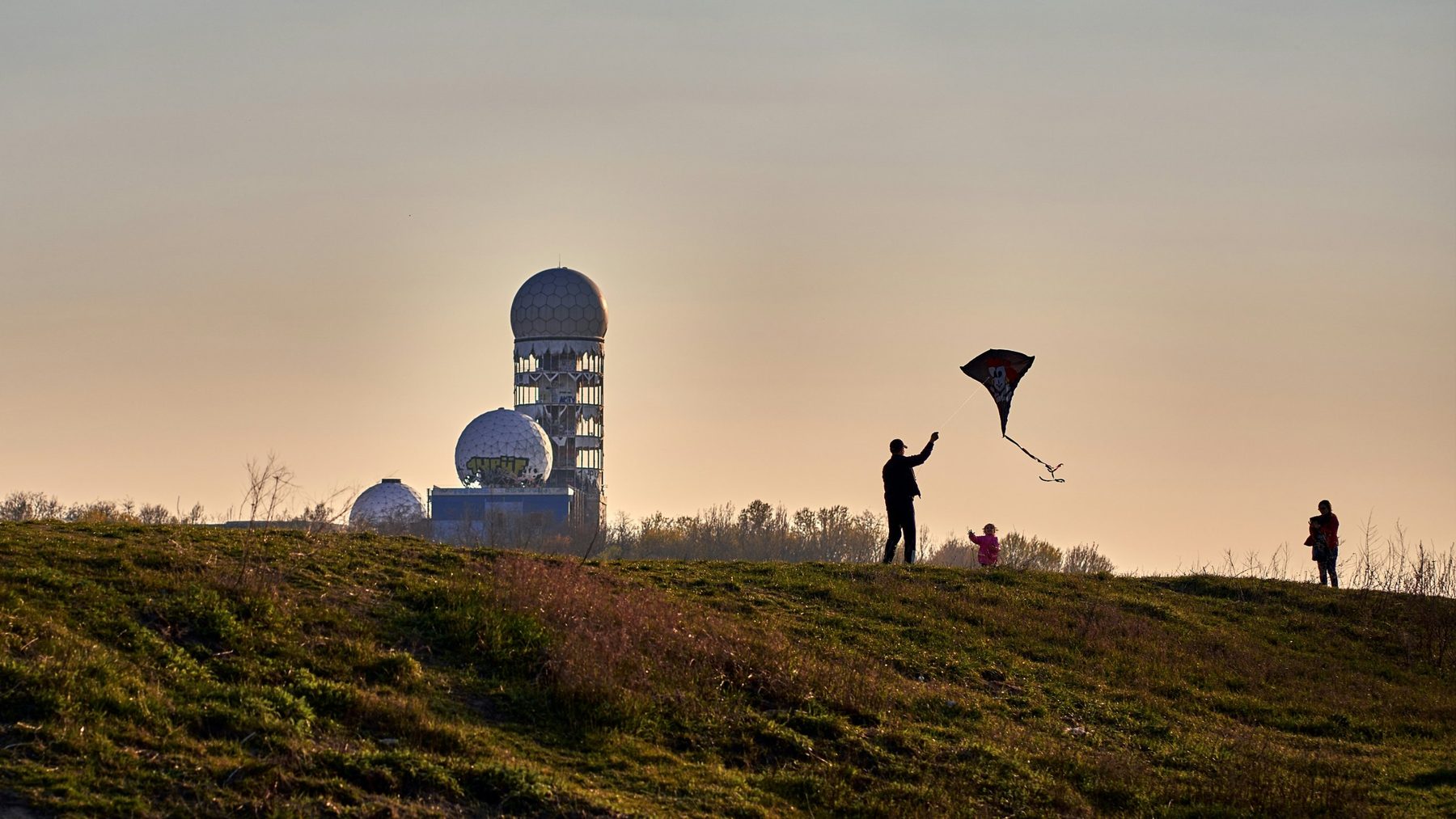
Where to live in Berlin with kids, with honest pros and cons for 14 areas, from the expat favorites to the city's best-value neighborhoods.
Almost every family we help move to Berlin arrives with the same first choice: Prenzlauer Berg. It's easy to see why. Leafy Altbau streets, playgrounds on every corner and cafes full of English-speaking parents make it the picture of family life in the city.
But it's also the most competitive place in Berlin to find a family flat, a Kita place or a school place, and it isn't automatically the best fit for every family. The good news is that Berlin is a very livable city for families almost everywhere. The trick is knowing what each area offers, and what it trades off.
This guide covers the best neighborhoods in Berlin for families, with our honest take on each one, based on our experience relocating families from the US and around the world.
Prenzlauer Berg is a good place to raise kids. But families who make it their only option tend to run into the same problems:
Keep it on your list, but give yourself two or three alternatives. Families who search more widely usually end up with a bigger flat, an easier Kita search and a calmer daily life.
In Berlin, the Kiez (your immediate neighborhood) matters more than the district. Very different streets often sit side by side, so it pays to look closely. To make areas easier to compare, we score each one from 1 to 5 on five things. A 5 is always the best result for families.
Affordability is based on what newcomers actually pay. Berlin's official rent index, the Mietspiegel, sets reference rents for existing tenancies, and the city-wide median existing rent is around €7 per square meter. New leases are advertised at more than double that: the median asking rent in 2025 was €15.78, ranging from about €20 in Mitte to under €13 in Reinickendorf and Spandau, according to the IBB Wohnungsmarktbericht 2025. We score each area on these asking rents, using neighborhood-level averages where a district mixes very different areas.
Availability is scored separately, because a lower rent doesn't mean an easier search. Charlottenburg and Schöneberg have higher asking rents than parts of Kreuzberg and Neukölln, yet flats come up there more often. In the most popular Kieze of Kreuzberg and north Neukölln, tenants rarely move out, and good flats are passed on privately instead of being advertised. This score reflects how hard our clients find it to secure a flat and a Kita place in each area.
Schools combine two things: the location of international schools and public bilingual schools (Staatliche Europa-Schulen), and the published Abitur results of nearby public Gymnasien. Berlin doesn't rank its schools, but it does publish every school's results.
English-friendly and family life reflect our team's experience of relocating families: how easy daily life is in English, and how much green space, calm, and convenience an area offers.
It's a guide, not an official ranking. Use it to build a shortlist, then look at individual streets.
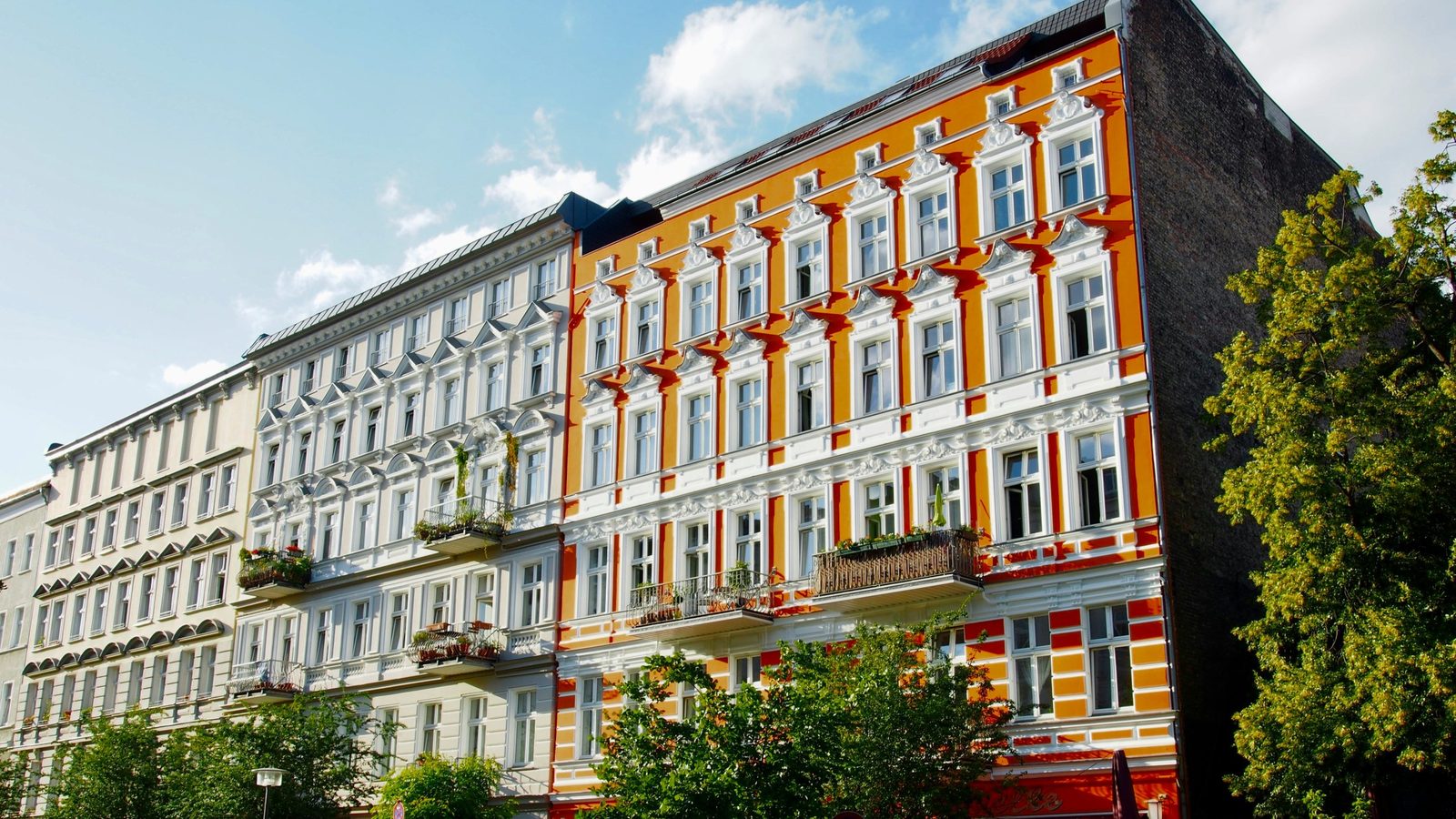
In the early 2000s, Prenzlauer Berg was a neighborhood on the rise, with plenty of space and affordable Altbau flats. Young families moved in early, and it grew and grew until it became the most sought-after neighborhood in Berlin. Today it's also the most expensive, with very little housing available. Flat searches here are fiercely competitive, and many apartments are overpriced for what you get.
It's still a lovely place to live, but it isn't one single neighborhood. The busy heart around Kollwitzplatz, Kastanienallee and the Kulturbrauerei feels very different from the calmer streets further north.
Our tip: Look north of Mauerpark, around Gleimstraße (the Gleimviertel). It's calmer, a little more affordable and just as family-friendly.
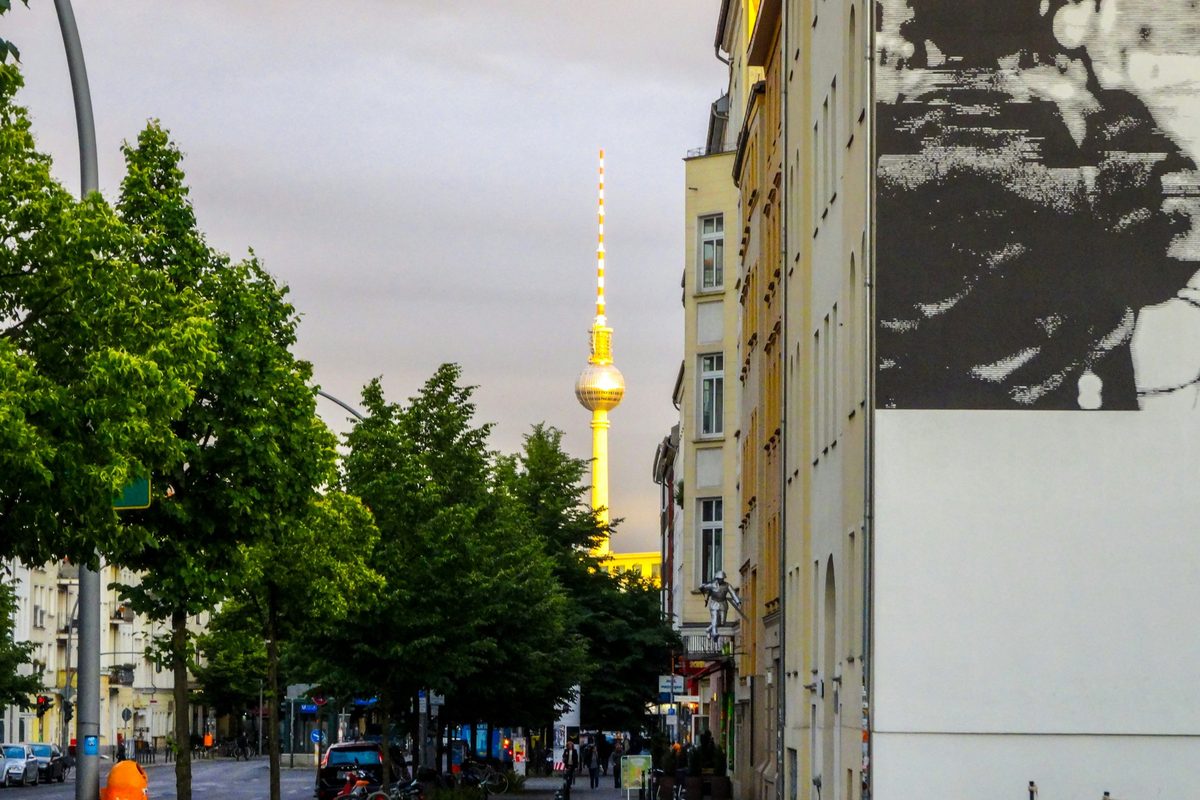
Many families rule out Mitte, assuming it's too central and too expensive. On paper it's the most expensive district, but it's varied, and the right flat can sometimes be easier to find than in Prenzlauer Berg. It also has the best access to international schools in the east, including Berlin Metropolitan School, one of the best-regarded international schools in the city, and Berlin Cosmopolitan School.
Where Mitte blends into Prenzlauer Berg, around Zionskirchplatz and Weinbergspark, the streets are full of small businesses and have a real neighborhood feel. It's popular and can be expensive, but underpriced gems still turn up. Toward Friedrichstraße and Chausseestraße, Mitte becomes more commercial. There are new-build developments that can suit families with a high budget, but most families we work with prefer to avoid the Friedrichstraße area unless they work nearby.
Our tip: Focus on the residential streets on the Prenzlauer Berg side rather than the business district around Friedrichstraße.
Friedrichshain is one of the most popular areas with expats: international, young and very English-friendly. Boxhagener Platz, with its weekend market, is the social heart of the south side. North of Frankfurter Allee, the Samariterkiez has a neighborhood feel much like Prenzlauer Berg and is especially popular with families.
That popularity has a price. Rents are high and, arguably, overvalued. If you want an international school, it isn't the best location: there are few in the east, and crossing the city by public transport can be slow. Local public schools, on the other hand, are among the strongest in Berlin. Connections to Mitte are good, though, so a school run to Berlin Metropolitan School is manageable. Kitas are easier to find, and local schools work well for children starting in a welcome class.
Our tip: Look north of Frankfurter Allee or around Boxhagener Platz, and avoid the busy, touristy area around Warschauer Straße.

Kreuzberg is as varied as Berlin itself. The Bergmannkiez is the family favorite, almost a Prenzlauer Berg of the south, with Viktoriapark and Tempelhofer Feld close by. Where Kreuzberg meets Neukölln, the Graefekiez and Kreuzkölln are extremely livable, with green, tree-lined streets along the canal. They're also some of the most competitive streets in the city for housing.
School quality is a mixed bag. There are public bilingual schools in English and Spanish, but no international schools on the doorstep, so families aiming for one usually commute to Mitte. Like much of the east, it has become expensive, though cheaper flats still come up through personal contacts.
Our tip: The Bergmannkiez is the calmest choice for families. If you love the canal-side streets, be ready to move fast when a flat comes up.
Neukölln is huge and stretches south to Britz, but when people talk about it they mostly mean the northern part, inside the Ringbahn. Traditionally a Turkish neighborhood, it's now a mix of Turkish and Arab communities, expats and newcomers from all over the world. The food is great, the street life is lively and the nightlife is excellent, which makes it a fun place for young people and young families.
Some Kieze are real family gems. The Schillerkiez, right next to Tempelhofer Feld, is calm and relaxed. Other parts are rougher around the edges. Further south there are fewer expats, rents are lower and more flats are available, but school access is weaker. Local school quality is mixed, and many expat families send their children to international or bilingual schools further north.
Our tip: Choose the Schillerkiez for family life next to Tempelhofer Feld, or look further south for value.

Pankow is becoming what Prenzlauer Berg once was: the place families move to next. Many German families are settling here for the green surroundings, good schools and more affordable housing. Around the Florakiez there's almost a small-town, village feel, yet Mitte is a short ride away.
It mixes old-school East German character with a newer, more international community, and it's still finding its identity. Pankow isn't for people who want to be in the thick of Berlin's nightlife or restaurant scene. If you want calm, green and livable, it's one of the most pleasant places in the city.
Our tip: Start with the Florakiez, and start your search early.
Calm, residential and a little grand, with wide streets, elegant Altbau apartments and villa quarters. This was long seen as one of Berlin's most expensive areas. Now that international families tend to look east first, there is less competition, and large flats often offer better value for the space.
The community is more German than in the east, though still international, like everywhere in Berlin. School access is among the best in the city, with international, bilingual and strong German schools, including the state-run Nelson Mandela School. Grunewald forest is close by.
Our tip: The quiet residential streets of Wilmersdorf offer the best balance. The area around Ku'damm is more commercial and busier.
Head southwest and Berlin turns into leafy suburbs, with lakes, forests and villas. Zehlendorf and Lichterfelde are very green, very calm and a bit out of the thick of things.
They're also a center for international families, largely because of the John F. Kennedy School, a tuition-free German-American public school, and other international schools nearby.
Our tip: Ideal for US families aiming for JFK School. Admission is competitive, so check the current criteria before choosing a flat.
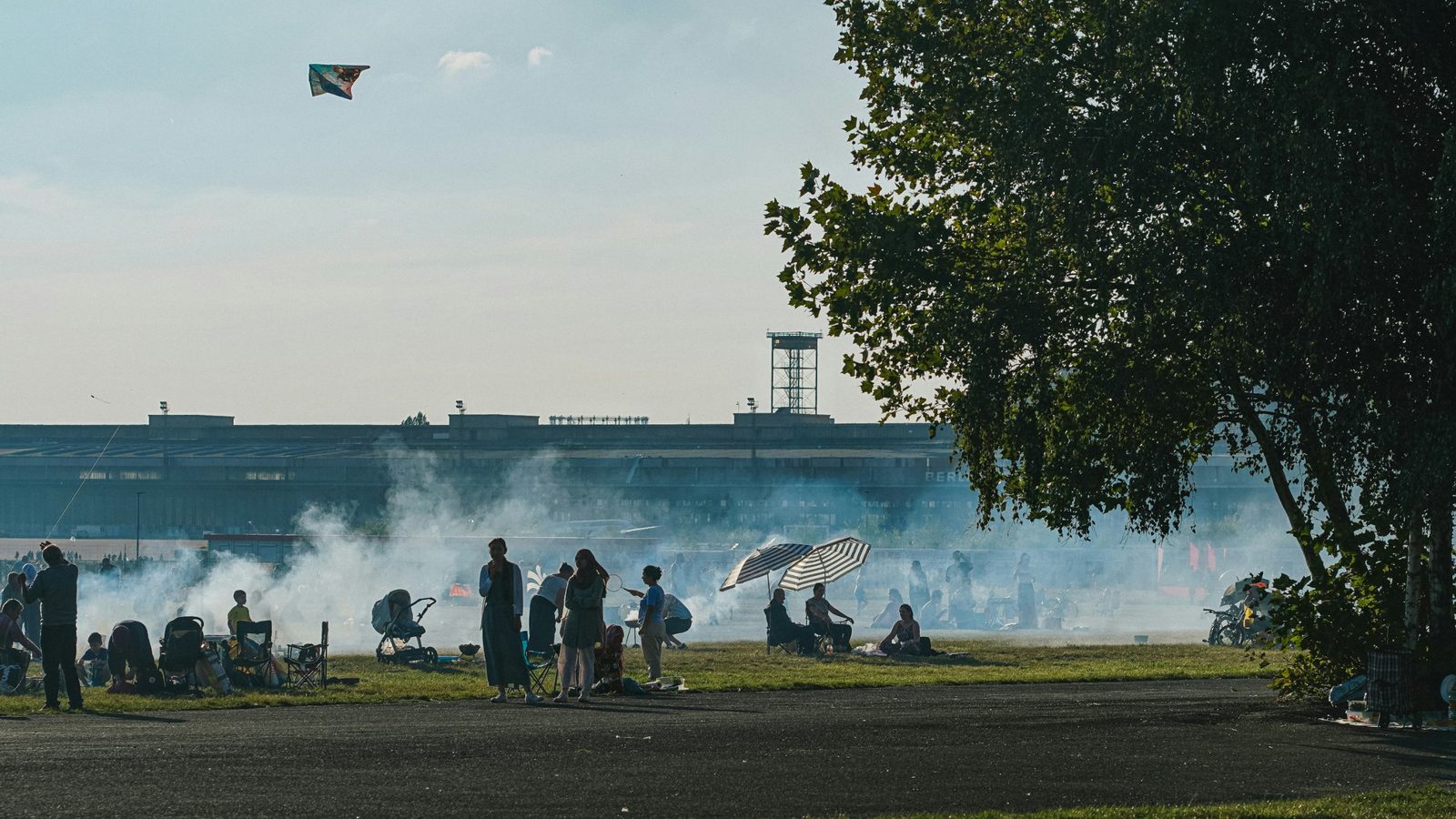
If your budget matters, or you need a bigger flat, these areas deserve a serious look. They have fewer expats and fewer international schools, but more availability, lower rents and good transport links.
There's a long-running Berlin joke that Wedding is going to be the next big thing next year. It never quite happens. Of course it has changed, but Wedding has kept its identity more than almost anywhere in the city, for better and for worse. It's one of Berlin's lower-income districts, and the Soldiner Kiez in Gesundbrunnen sits right next to Prenzlauer Berg, one of the wealthiest areas in the city.
We see that as an opportunity: affordable housing in an interesting, changing neighborhood. Whether or not it ever gentrifies, the fact that it has stayed affordable is exactly what makes it right for many families. It's not for anyone who wants postcard-perfect streets. It can be messy and rough around the edges. But the diversity is genuinely inspiring, and it's one of our team's personal favorites.
Our tip: Look at the streets near the Prenzlauer Berg border. Excellent U-Bahn and S-Bahn links make a 20 to 30 minute school run realistic.
Moabit somehow missed out on Berlin's cool reputation, but it's very livable, diverse and often undervalued. It feels somewhere between Charlottenburg and Neukölln. Around Turmstraße it's busy and international; down by the river near Bellevue it's grand and leafy.
The housing is a real mix: beautiful Altbau that recalls Prenzlauer Berg and Charlottenburg, alongside 1960s blocks and some rougher, more multicultural corners around Turmstraße and Beusselstraße. That mix is part of what makes it interesting, and like Wedding, it's an area on the rise.
Our tip: The streets toward the river are the calmest for families.
Charlottenburg's reputation comes from the area around Wilmersdorf. The north, above Charlottenburg Palace, is different: a mix of new developments and older, more modest housing estates, with some of the most affordable rents in the west. There are fewer expats and plenty of students, and it's a calm, practical place to live.
Our tip: Good value if your children will go to school in Charlottenburg or Wilmersdorf.
Both districts are extremely varied: very pleasant in places, rougher in others, with larger postwar housing blocks mixed in. Schöneberg has the stronger school situation, with many good local German schools. It's popular with young German families looking for classic Berlin character away from the tourist crowds, and its streets mix beautiful old buildings with newer ones. It was historically the center of Berlin's gay scene and keeps much of that character, though queer life is now spread across the city.
Southern Schöneberg and Tempelhof, around Alt-Tempelhof, are among the more affordable parts of the city, with more housing available and good transport links north to Mitte and Charlottenburg and south to Zehlendorf. There are fewer strong schools near Tempelhof, so it suits families willing to travel for school. Both districts have plenty of parks.
Our tip: Choose Schöneberg for local schools, or Tempelhof for value if you're happy to travel for school.
Both are good, more affordable bases for calm family life, especially if your children will attend JFK School or another international school in the southwest. Steglitz is well connected by S-Bahn and has a small-town feel. It's not especially cosmopolitan, but it's pleasant and practical.
Spandau has an old-town center with an almost medieval village atmosphere. It has far fewer international residents, is more traditional, and some people find it a little soulless. Nearby Siemensstadt has a corporate, traditionally German character shaped by large employers such as Siemens. Spandau isn't a popular choice with most expats, but it's a good place to live.
Our tip: Steglitz is the better pick for the southwest's international schools at lower rents.
Reinickendorf is a huge district north of Wedding: residential, affordable and almost untouched by tourism. Expats rarely look here, but it's growing in popularity thanks to good public transport and affordable housing. It isn't a center of cosmopolitan life, and because it stretches a long way north, you won't find everything on your doorstep. Good transport links are key.
Local schools are fine, and the district even has a French-German Europa-Schule. Neighboring Pankow has more bilingual options, and schools in Mitte, including Berlin Metropolitan School, are reachable with good connections.
Our tip: Start in the southern part, around Residenzstraße, where there are new developments and good transport links.
International schools are concentrated in the southwest and the center, with few options in the east. Berlin also runs a free public alternative: around 30 Staatliche Europa-Schulen Berlin (SESB), teaching in German plus one of nine partner languages, including English, French and Spanish. English and French places are oversubscribed and admission involves a language test, so apply early. Most sites are in the west and center, though the city has committed to adding more in the eastern districts.
Strong public schools are more evenly spread. Berlin doesn't rank its schools, but the Senate publishes Abitur results for every school. These were the ten public Gymnasien with the best average Abitur grades in 2024, according to the Senate's Abitur 2024 results (1.0 is the best grade):
Abitur averages say as much about who a school admits as about its teaching, and several of these schools select students from grade 5. Places are competitive, too: the most requested Gymnasium in the city is the Felix-Mendelssohn-Bartholdy-Gymnasium in Prenzlauer Berg. Even so, the list shows that some of Berlin's best public schools are in the east. You can look up any school's results in the Senate's online school portraits. If one school matters most, choose the school first and the neighborhood second.
Younger children usually pick up German quickly in a Kita or a German school, often starting in a welcome class (Willkommensklasse). For teenagers the switch is harder, which is why many families prioritize bilingual or international schools at that age. Our guide to international and bilingual schools in Berlin covers the options in detail.
Flats with three or more bedrooms are scarce and attract many applicants. Landlords usually expect rent of around a third of your net income and want a complete application: proof of income, ID and, ideally, a credit check (Schufa) and a reference from your previous landlord. Searching two or three neighborhoods instead of one makes a real difference.
There's no single answer. Prenzlauer Berg, Pankow, Wilmersdorf and Zehlendorf are all popular, but the best choice depends on your budget, your school plans and the lifestyle you want.
Many choose Zehlendorf and Lichterfelde for the John F. Kennedy School, while others prefer English-friendly central areas such as Prenzlauer Berg, Mitte and Kreuzberg.
North Charlottenburg, Reinickendorf, Wedding, Gesundbrunnen and Tempelhof have some of the lowest asking rents within easy reach of the center, along with better availability.